
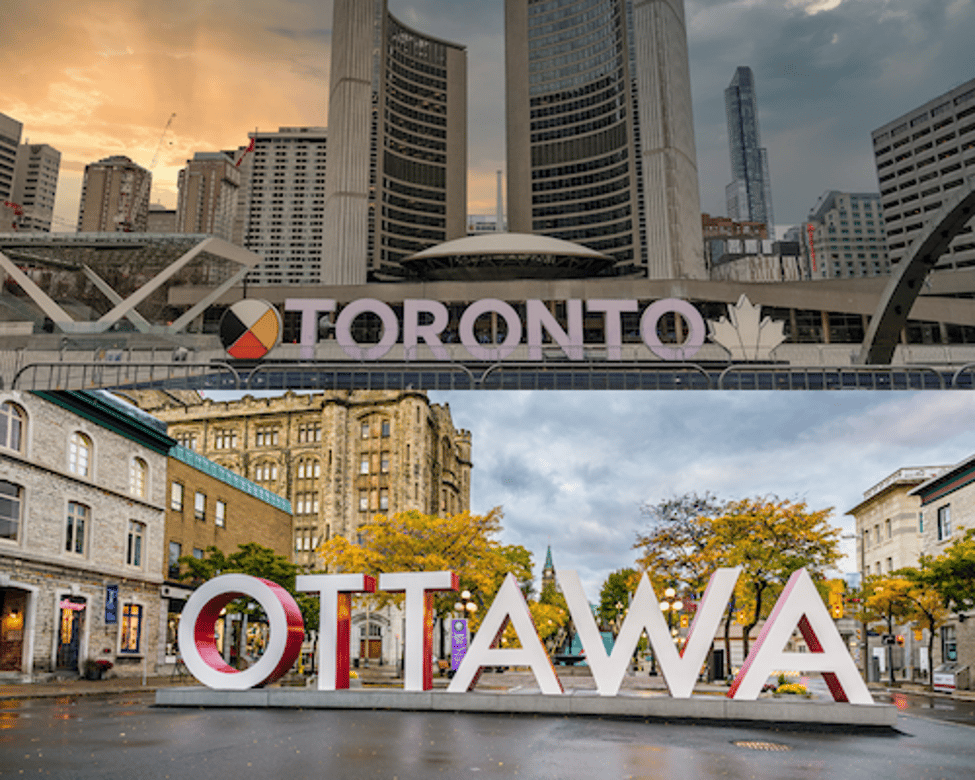
Choosing between Ottawa and Toronto is one of the most common real estate decisions in Ontario. Both markets are strong, but they serve very different types of buyers depending on budget, lifestyle, and long-term goals.
This guide is for buyers, investors, and relocating families trying to decide where they get better value and long-term fit in today’s market. It breaks down affordability, lifestyle, job opportunities, and investment outlook in a clear, practical way.
Ottawa vs Toronto Real Estate: The Core Difference
The main difference between Ottawa and Toronto is not just price—it’s overall market structure.
- Ottawa is generally more accessible and balanced
- Toronto is more competitive, dense, and globally driven
In simple terms:
- Ottawa prioritizes space, stability, and affordability
- Toronto prioritizes opportunity, density, and long-term upside
Affordability and Buying Power
Affordability is often the deciding factor for most buyers.
Ottawa:
- More attainable entry into homeownership
- Lower monthly carrying costs
- More options for detached homes and townhouses
- Strong value in suburban communities
Neighbourhoods like Barrhaven, Kanata, and Orléans are often chosen by buyers who want space without stretching their budget too far.
Toronto:
- Higher barrier to entry
- Smaller living spaces for similar budgets
- Greater financial pressure on monthly payments
- Strong competition for desirable properties
For many buyers, the difference in affordability directly impacts whether they can comfortably enter the market or not.
Lifestyle and Day-to-Day Living
Lifestyle is another major factor that separates the two cities.
Ottawa lifestyle:
- Slower pace and more family-oriented living
- Easier access to green space and outdoor activities
- Shorter average commute times in many areas
- Strong suburban communities with a quieter environment
Neighbourhoods like Glebe, Centretown, and Hintonburg offer a more urban feel, while still maintaining a manageable lifestyle balance.
Toronto lifestyle:
- Fast-paced and highly urban environment
- High-density living is more common
- Strong access to entertainment, culture, and nightlife
- Longer and more complex commuting patterns depending on location
Job Market and Career Considerations
Your career path often influences which city makes more sense.
Ottawa:
- Strong presence of government employment
- Stable public sector-driven economy
- Growing tech and professional services sector
- More predictable employment environment
Toronto:
- Broader corporate and financial sector presence
- More industries and career pathways overall
- Higher competition but also more opportunity for advancement
- Strong global business connections
In simple terms, Ottawa tends to offer stability, while Toronto offers scale and variety.
Investment and Long-Term Outlook
Both markets attract investors, but for different reasons.
Ottawa:
- More stable and predictable market behavior
- Less volatility during economic shifts
- Steady long-term demand supported by employment base
- Lower speculation compared to larger markets
Toronto:
- Strong long-term appreciation potential in key areas
- Higher investor activity and competition
- More sensitivity to interest rate changes
- Greater market fluctuations during economic cycles
Which City Fits Different Types of Buyers
Ottawa may be a better fit if you want:
- More affordable homeownership options
- A detached home or larger living space
- A stable and predictable market
- A quieter, more balanced lifestyle
- Strong long-term livability
Toronto may be a better fit if you want:
- Maximum career exposure and opportunity
- A highly urban lifestyle
- Access to a large and diverse job market
- Strong long-term growth potential in select areas
- A fast-paced city environment
The Real Decision Behind Ottawa vs Toronto
The choice is rarely just about real estate. It usually comes down to priorities:
- If your focus is affordability and lifestyle balance, Ottawa often provides more breathing room
- If your focus is career growth and urban opportunity, Toronto offers more scale but requires higher financial flexibility
Many buyers today are also considering hybrid lifestyles, including remote work, which makes Ottawa increasingly attractive for those who want both value and quality of life.
Frequently Asked Questions
Is Ottawa more affordable than Toronto for buying a home?
Yes. Ottawa is generally more affordable across all property types, making it easier for many buyers to enter the market and manage monthly costs.
Is Toronto real estate still a strong investment?
Toronto remains a strong long-term market, especially in well-located areas. However, it also comes with higher costs and more sensitivity to market changes.
Which city is better for first-time buyers?
Ottawa is often more suitable for first-time buyers due to lower entry costs and more manageable financial requirements.
Does Ottawa real estate appreciate like Toronto?
Ottawa tends to grow more steadily over time, while Toronto can experience stronger swings depending on market conditions.
Is it worth moving from Toronto to Ottawa to buy a home?
For many buyers, yes. The main advantage is improved affordability and the ability to buy more space without overextending financially.
Which city has a stronger rental market?
Toronto has higher rental demand due to population density, while Ottawa offers stable and consistent rental demand driven by employment sectors.
Ottawa and Toronto offer very different real estate experiences. One is built around stability, affordability, and livability. The other is built around opportunity, density, and long-term market scale.
The right choice depends less on which city is “better” and more on what fits your financial comfort, lifestyle goals, and long-term plans.
If you’re weighing both options, a short strategy conversation can help clarify which market aligns best with your situation before you make a major decision.

