
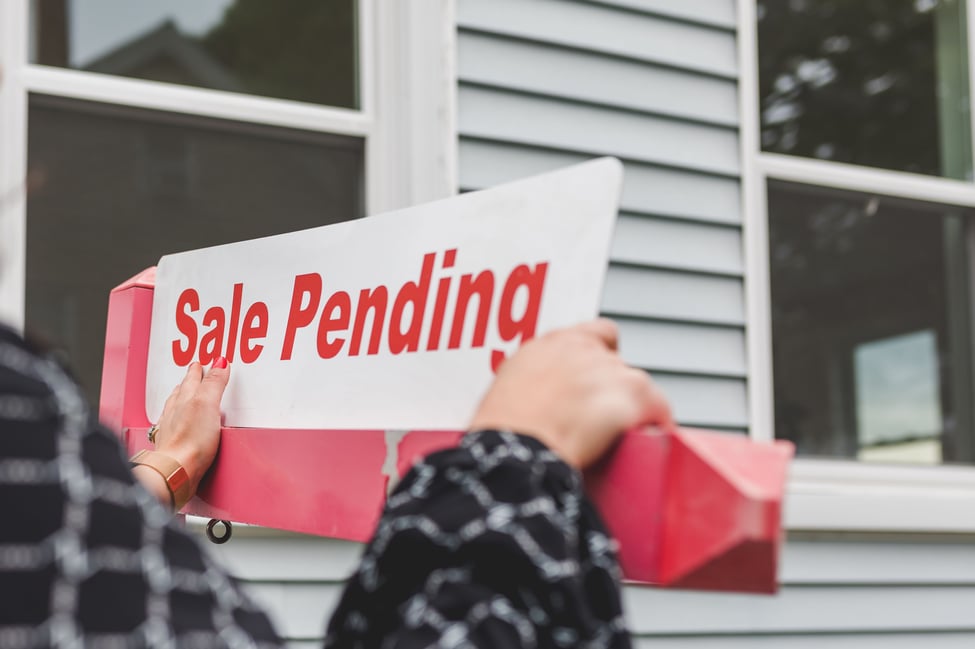
If your Ottawa home has been sitting on the market longer than expected, this article is written specifically for you. It covers the eight most common reasons homes are not selling in Ottawa's current market, and what sellers can do about each one — practically, specifically, and without vague advice. Understanding why your home is not attracting offers is the first step toward changing that outcome.
The Market Has Shifted — and Many Ottawa Sellers Have Not Caught Up
Ottawa's real estate market in 2026 is not the market of 2021. That distinction matters enormously for sellers, and many homeowners who listed their property based on peak-year expectations are now sitting with a listing that is accumulating days on market instead of offers.
In 2021 and early 2022, Ottawa sellers operated with a significant structural advantage. Inventory was critically low, buyer demand was urgent, and multiple offers above asking price were the norm across almost every neighbourhood — from Barrhaven and Kanata in the suburbs to Hintonburg and Centretown in the urban core. Sellers could price aggressively, skip staging, and expect buyers to overlook deficiencies simply to secure a property.
That environment no longer exists. Ottawa's active inventory has risen considerably since that period. Buyers have more options, more time to evaluate those options, and less urgency to make aggressive moves on properties that are not clearly worth the price being asked. Interest rates that remain elevated relative to the 2020–2021 period have also tightened what buyers can realistically afford — making price sensitivity a front-and-centre factor in every purchase decision.
The sellers succeeding in Ottawa's 2026 market are not the ones hoping the market will shift back in their favour. They are the ones who have adapted their strategy — on price, on presentation, and on how they position their property relative to the current competition.
Why Your Ottawa Home Is Not Selling: Eight Reasons That Are Costing You Offers
1. The Price Is Out of Step With What the Market Will Support
Overpricing is the single most common reason Ottawa homes are not selling in 2026 — and the most consequential one.
Many sellers anchor their price expectations to what a neighbour sold for in 2022, or what they believe their home is worth based on the improvements they have made. Neither anchor is reliable in today's market. Buyers are not comparing your home to what sold two or three years ago. They are comparing it to what is available and selling right now.
Ottawa's MLS data consistently shows that overpriced listings follow a predictable and damaging pattern:
- They generate initial views online but fewer showings than correctly priced listings
- They sit on the market longer, accumulating days on market that buyers treat as a warning signal
- They eventually receive a price reduction — but by then, the most motivated and qualified buyers have already moved on
- They often sell for less than they would have if priced correctly from the beginning
The fix is not a reluctant $10,000 reduction several weeks in. It is a pricing strategy built on a current, accurate Comparative Market Analysis — one that reflects what buyers in your specific Ottawa neighbourhood are actually paying right now, not what the market supported at its peak.
2. The Home's Presentation Is Not Competitive With Other Listings
Buyers in Ottawa's 2026 market are comparison shopping with far more discipline than they were during peak years. When they have ten properties to consider instead of two, presentation becomes a differentiating factor — and homes that look dated, cluttered, or poorly maintained online are simply not getting shortlisted for showings.
Presentation problems that consistently reduce buyer interest include:
- Poor quality listing photography — dark, blurry, or poorly framed images that do not accurately represent the home's best features
- Cluttered or over-personalized interiors that prevent buyers from visualizing themselves in the space
- Deferred cosmetic maintenance — scuffed walls, worn flooring, dated fixtures — that signals to buyers the home has not been cared for
- Curb appeal neglect — overgrown landscaping, aging paint, cluttered entryways that create a negative first impression before a buyer steps inside
In a market where the first showing happens online, photography is not a secondary consideration. It is the primary filter buyers use to decide which homes are worth visiting in person.
A professionally staged and photographed home in Barrhaven, Orléans, or Kanata will consistently outperform an equivalent home with poor presentation — often receiving more showings, more offers, and a faster sale at a stronger price.
3. The Home Has Not Been Prepared for What Today's Buyers Expect
Move-in-ready is not a luxury category in Ottawa's 2026 market. It is a baseline expectation for a significant portion of active buyers.
Buyers who are already stretching their budget to manage a purchase at current mortgage rates are far less inclined to take on a home that requires immediate work. They are calculating their total cost of ownership from the moment they make an offer — and a home that signals deferred maintenance signals additional expense.
Specific issues that are causing Ottawa buyers to pass or reduce their offers include:
- Aging roofs with visible wear or limited remaining life
- Outdated electrical panels that insurance providers may flag
- HVAC systems that are beyond their expected service life
- Unfinished or water-damaged basements
- Windows and doors that are clearly past their prime
None of these issues are necessarily deal-breakers — but they must be priced for, disclosed clearly, or addressed before listing. Sellers who leave these items for buyers to discover during an inspection frequently lose deals or face renegotiated prices after the fact.
The most effective approach is a pre-listing home inspection that identifies issues before they become a negotiating liability.
4. The Listing Is Not Reaching the Right Buyers
A correctly priced, beautifully presented home can still fail to sell if the marketing strategy does not connect it with qualified buyers.
In 2026, buyer search behavior is sophisticated. Buyers use multiple platforms — MLS, Realtor.ca, Zillow, social media, and direct agent relationships — to monitor listings. A marketing approach that relies solely on MLS listing syndication without a broader strategy is leaving a meaningful portion of the potential buyer audience unengaged.
An effective Ottawa listing marketing strategy in 2026 typically includes:
- Professional photography and, where appropriate, video or virtual tour content
- MLS listing with complete, well-written property descriptions that highlight specific features buyers search for
- Targeted social media promotion to buyer demographics in relevant income and lifestyle segments
- Direct agent-to-agent outreach to local buyer agents who are actively working with qualified purchasers
- Open house strategy — well-promoted, timed to market activity windows, and presented to showcase the home at its best
Sellers whose homes are sitting without traffic should ask their agent directly: where is this listing being promoted, and what evidence exists that it is reaching qualified buyers?
5. The Location or Property Type Is Facing a Specific Supply Imbalance
Not every slow-selling Ottawa home has a pricing or presentation problem. Some are simply in a neighbourhood or property type category where supply has temporarily outpaced demand — and that requires a different conversation.
In 2026, certain Ottawa market segments have seen notable inventory increases:
- Larger detached homes in the higher price ranges of Kanata and Barrhaven face more competition from new-build alternatives
- Condo units in buildings with high investor ownership ratios are competing against significant similar inventory
- Semi-detached and townhome listings in Orléans have increased as newer phases of suburban development come to market
If your home falls into a category where supply is elevated, the path to a sale requires either a price that positions your property as the clear best-value option in the segment, or patience — with a marketing strategy designed to capture the buyers who will arrive as existing inventory is absorbed.
Understanding whether your challenge is a presentation issue, a price issue, or a supply-category issue is critical to choosing the right response.
6. Buyers Are Conducting Deeper Due Diligence — and Finding Reasons to Walk Away
In a market where buyers have time and options, the due diligence process has become more thorough. Buyers are not accepting verbal reassurances. They are hiring home inspectors, reviewing documents carefully, and asking detailed questions about the property's condition, history, and costs.
Sellers who are not prepared for this level of scrutiny frequently lose deals that appeared secure.
Common due diligence findings that cause Ottawa buyers to withdraw or renegotiate:
- Home inspection reports revealing significant structural, mechanical, or water-related issues that were not disclosed
- Condo status certificates revealing high special assessment risk, elevated reserve fund deficiencies, or restrictive rules
- Property surveys revealing encroachments, easements, or lot line discrepancies
- Outstanding permits or unpermitted renovations that create legal uncertainty
The most effective seller strategy is to resolve or fully disclose known issues before listing — not to hope buyers will not discover them. Buyers who feel a seller was not transparent with them rarely proceed to close, and the reputational effect of a collapsed deal can make re-listing more difficult.
7. The Offer Process Is Not Being Managed Effectively
A home that generates showings but is not converting them into offers is experiencing a specific problem — and it is often found in how the offer process is being managed rather than the property itself.
In Ottawa's current market, offer presentation and negotiation dynamics have changed. The assumption that buyers will self-escalate to your asking price without encouragement is no longer reliable.
Effective offer-stage practices that Ottawa sellers should ensure their agent is implementing include:
- Following up promptly with buyer agents after every showing to gather specific feedback
- Using that feedback to identify whether objections are price-related, condition-related, or presentation-related
- Evaluating whether an offer review date strategy — setting a specific date for offer presentation — makes sense given current showing volume
- Responding to low offers with a clear, professional counteroffer rather than simply declining
- Identifying whether small adjustments to terms — closing date flexibility, inclusions, or minor conditions — might bridge a gap without requiring a significant price reduction
The difference between a seller who accepts a reasonable offer efficiently and one who loses a motivated buyer through poor negotiation management can represent tens of thousands of dollars in final sale price.
8. The Listing Has Accumulated Days on Market Without a Strategic Reset
Every day a home sits on the Ottawa MLS without selling, it accumulates a specific liability: days on market (DOM) — a number that buyers and buyer agents actively use to assess whether something is wrong with a property.
When buyers see a home that has been listed for 45, 60, or 90 days without selling, the instinctive question is not "why hasn't this sold?" — it is "what is wrong with it that everyone else can see?" That perception, whether accurate or not, creates a negotiating disadvantage for sellers.
If your Ottawa listing has accumulated significant days on market, a passive wait-and-see approach is unlikely to produce a different result. A strategic reset typically requires:
- A meaningful, decisive price adjustment based on current comparable sales — not a cosmetic reduction
- A fresh set of professional listing photographs, particularly if the season has changed
- A revised listing description that repositions how the property's key features are communicated
- In some cases, a brief withdrawal from the market followed by a re-list — to reset the DOM counter and restore the impression of a fresh listing to the buyer pool
A strategic reset, done correctly, can reactivate buyer interest in a listing that has gone stale — but it requires honest assessment of what caused the stagnation in the first place.
What This Means for Ottawa Sellers Right Now
The Ottawa sellers who are achieving successful sales in 2026 share a consistent set of practices. They priced their homes based on current market data from the beginning. They invested in professional presentation before listing. They chose a marketing strategy that reached qualified buyers across multiple channels. And they remained flexible and responsive throughout the process.
The sellers experiencing difficulty are, in most cases, doing one or more of the following: pricing based on an outdated market reference, listing without adequate preparation, or waiting passively for market conditions to improve rather than adapting their strategy to the conditions that currently exist.
The practical implication is direct: if your home is not selling in Ottawa's 2026 market, something in your strategy needs to change. The market is not broken. It is functioning exactly as a balanced market should — rewarding well-positioned listings and penalizing those that are not competitive on price, presentation, or both.
The question is not whether the market will eventually return to your favour. It is whether your current strategy is calibrated for the market that actually exists right now.
The Key Insight Most Ottawa Sellers Miss
Most sellers who are struggling in Ottawa's current market believe their problem is the market itself.
The more honest diagnosis is usually simpler: their home is not the best option available to buyers in their price range and neighbourhood at this moment in time.
That is a solvable problem. But solving it requires a seller to ask a question that is genuinely uncomfortable: if I were a buyer right now, with a fixed budget, comparing this home to everything else available in this area, would I choose this one?
If the honest answer is no — or "probably not" — then the path forward is to identify specifically what would need to change to make the answer yes. Sometimes it is price. Sometimes it is presentation. Sometimes it is a targeted repair or improvement that changes the buyer's calculation. Sometimes it is all three.
Sellers who are willing to ask that question honestly, and act on the answer, move their homes. Sellers who are not willing to ask it continue to wait.
Ottawa's market in 2026 is not preventing qualified homes from selling. It is simply raising the standard for what qualifies as a competitive listing — and the sellers who meet that standard are succeeding.
Frequently Asked Questions
Why is my Ottawa home not getting any showings? Low showing volume is almost always a price or presentation problem. If your list price is above what current comparable sales support, buyer agents will filter your property out before their clients ever see it. If your listing photography or online presentation is poor, buyers may be dismissing the property based on what they see online. A current market analysis and a review of your listing's online presentation are the right starting points.
How long should it take to sell a home in Ottawa in 2026? Well-priced, well-presented homes in desirable Ottawa neighbourhoods are typically selling within 20 to 45 days in 2026's more balanced market. Homes that are overpriced or require condition work may sit considerably longer. If your home has been on the market beyond 60 days without an accepted offer, the listing strategy almost certainly requires reassessment.
Should I reduce my price if my Ottawa home is not selling? A price reduction may be necessary — but only if the comparable sales data confirms your current price is above market value. Before reducing, ensure that presentation, marketing, and showing feedback have all been thoroughly evaluated. A price reduction on a home with a marketing or presentation problem will not solve the underlying issue. When a price reduction is warranted, it should be decisive and data-driven, not a series of small incremental reductions.
Does staging actually help sell a home in Ottawa? Yes, meaningfully so. Professionally staged homes in Ottawa consistently show better in photographs, generate more showings, and in many cases sell faster and closer to asking price than equivalent unstaged listings. In a market where buyers have more options and are making initial decisions based on online photography, staging is one of the highest-return pre-listing investments most sellers can make.
What do Ottawa buyers find most off-putting when viewing a home? The most common buyer objections after showings in Ottawa's current market relate to: deferred maintenance or condition concerns, odours (pets, smoking, moisture), cluttered or over-personalized spaces that make it difficult to envision living there, and homes that appear significantly better in photos than they do in person. Addressing these factors before listing eliminates objections that would otherwise prevent offers from being written.
Should I take my Ottawa home off the market and relist it? A strategic withdrawal and relist can be effective when a listing has accumulated significant days on market and a meaningful change — such as a price adjustment or improved presentation — has been made. Relisting without making substantive changes simply resets the clock without addressing the underlying reason the home did not sell. Buyer agents are experienced at identifying listings that have cycled through this process without genuine improvement.
Is it worth doing repairs before selling my Ottawa home in 2026? It depends on the nature and cost of the repairs relative to the likely return. Cosmetic improvements — paint, flooring, lighting fixtures, landscaping — typically deliver strong returns in buyer perception and listing presentation. Larger mechanical or structural repairs should be evaluated on a case-by-case basis, weighing the cost of the repair against the impact on buyer confidence and sale price if left unaddressed. A pre-listing inspection helps sellers make those decisions with full information rather than guessing.
Your Home Can Sell — Sometimes It Just Needs a Different Approach
If your Ottawa home has been sitting on the market longer than expected, the answer is rarely to simply wait. It is to identify specifically what needs to change — and make that change with intention.
A second opinion costs you nothing. If you would like an honest, no-obligation conversation about why your home may not be attracting offers and what a revised strategy might look like, I am happy to walk through that with you.
No pressure. Just a straightforward assessment from someone who works in Ottawa's market every day and has seen what separates listings that close from ones that do not.
Murtaza Siddiqui
RE/MAX Hallmark Realty Group
Your Ottawa Real Estate Broker
Market information reflects general conditions in Ottawa's residential real estate market as of 2026. Days on market benchmarks, showing expectations, and price adjustment guidance are general in nature and will vary by neighbourhood, property type, and individual listing circumstances. This article is intended for informational purposes and does not constitute legal or financial advice. Consult a licensed Ottawa real estate professional for a strategy assessment specific to your property.

